A FIELD GUIDE TO THE UNSEEN
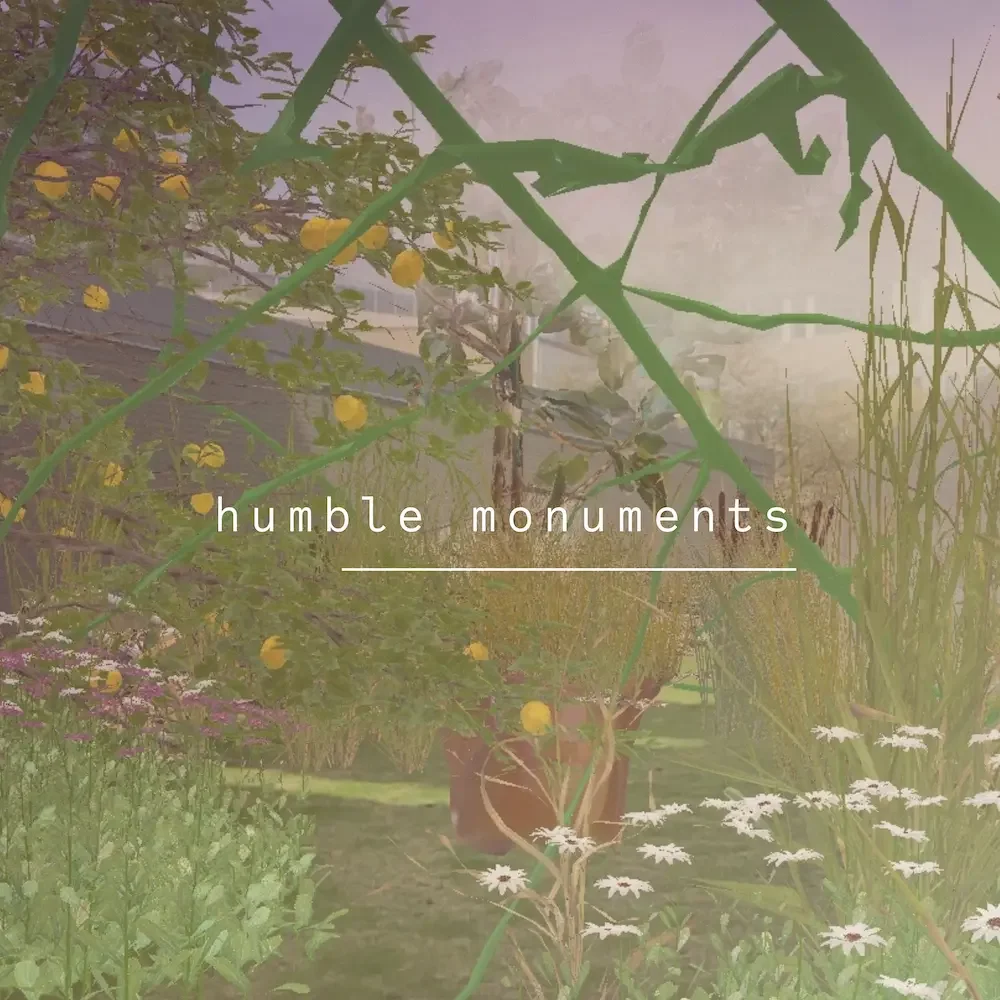
Humble Monuments
Location: Seaholm Lawn on W Cesar Chavez St
Unfolding where the visible and invisible city coexist, Humble Monuments explores the delicate interdependencies that sustain life- inviting reflection on what we choose to remember, protect, and cultivate together. Visitors encounter intimate human stories and memory threads as they wander through soundscapes and three-dimensional digital plantscapes, overlaid throughout the installation site. The work proposes care as an aesthetic, ethical, and ecological practice. Each “humble monument” bridges presence and loss, conjuring what is here, what has vanished, and what remains possible.
Open Access Memorial
By: Yucef Merhi
Location: Corner of San Antonio St & Federal Courthouse Plaza
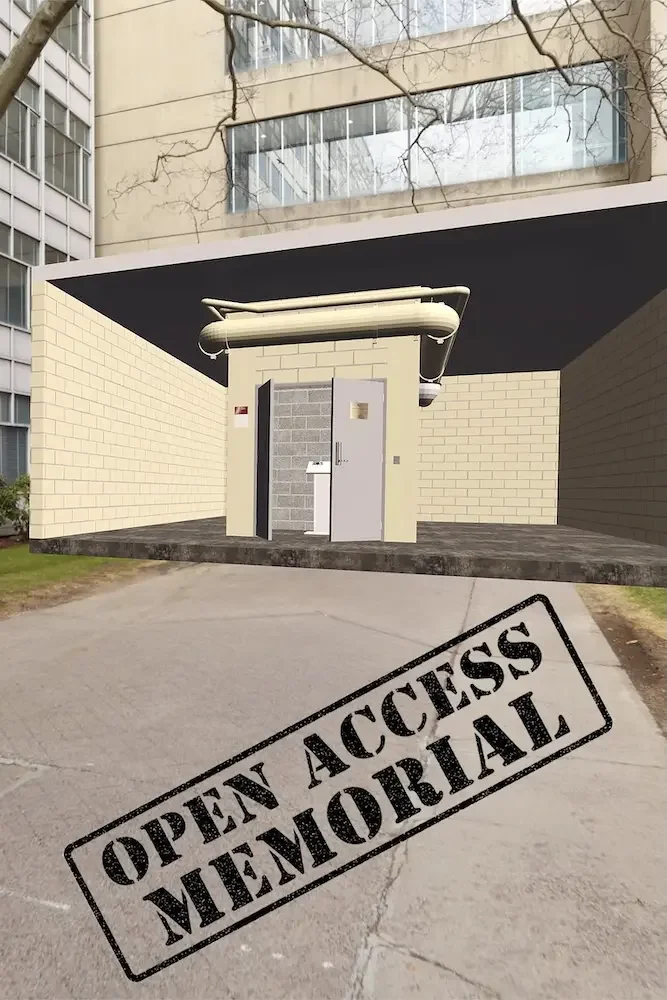
Open Access Memorial enables people to experience the MIT basement corridors and closet where Aaron Swartz downloaded millions of JSTOR articles, an incident that led to his arrest and later death. However, instead of cables and racks, participants will see a book plinth in the center of the closet, displaying the 2 pages of the Guerilla Open Access Manifesto. This manifesto, written by Swartz in 2008, is a call to action, advocating for open access to academic research, particularly to articles and papers that are often hidden behind expensive paywalls. Swartz believed that the scholarly knowledge should be freely accessible to everyone and not locked behind costly pay-per-article systems.
HEALING GROUND
ORYZA
By: Tamara Shogaolu
Location: Republic Square Park
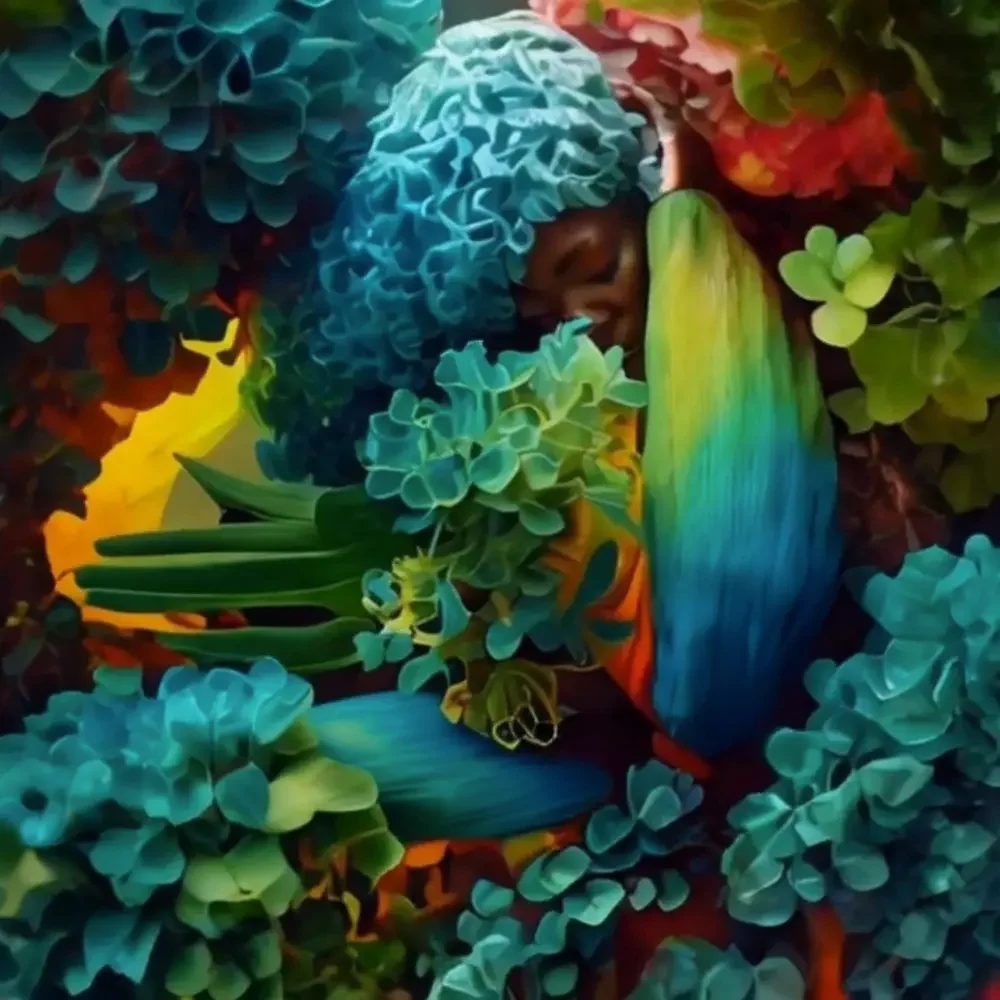
This experimental animated documentary interrogates the colonial legacies embedded in archives through the lens of Black land stewards. Combining live-action footage, archival material, and animation, Oryza: Healing Ground reimagines archives as dynamic, living systems. A custom-built Artificial Intelligence system centered on Black histories, creates evolving digital motifs on Afrocentric perspectives, challenging the exclusion of Black voices from AI and algorithmic technologies.
Starting with the West African cultivation of rice, the knowledge of which was carried and disseminated by enslaved farmers, the film follows the trail of Black history to unearth a variety of nearly forgotten stories. These motifs, a visual metaphor for time travel, weave throughout the film, connecting past, present, and future, and highlighting the enduring relationship between Black communities and the land. Through this innovative blending of technology and documentary filmmaking, Oryza: Healing Ground seeks to deconstruct static historical narratives, preserving and amplifying the stories of Black farmers in new and groundbreaking ways.
Moving Memory
By: Lori Landay
Location: 600 West 2nd Street in downtown Austin
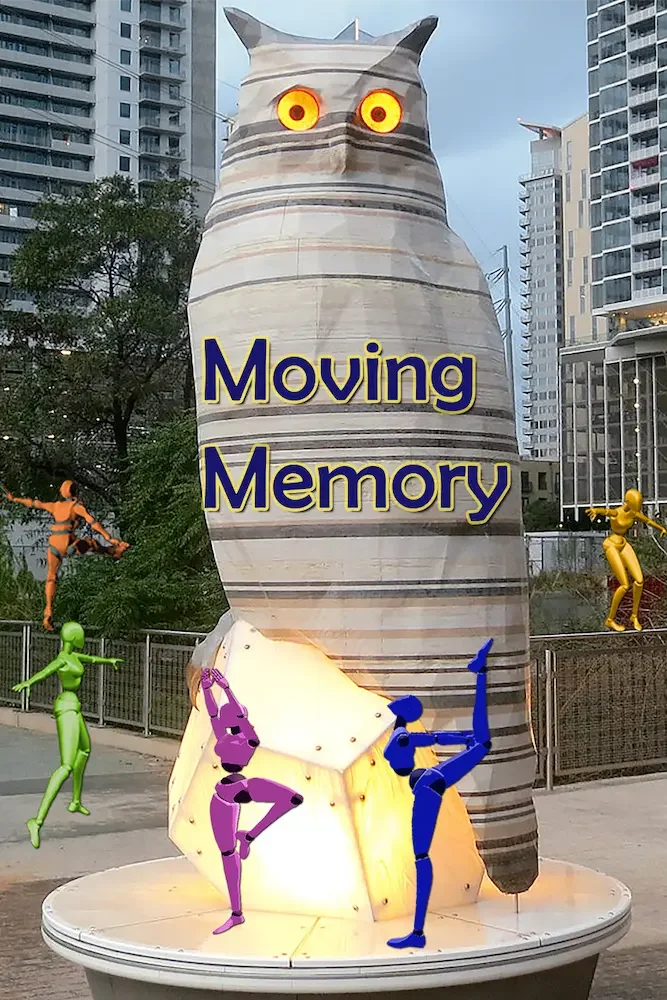
Move between memories. Moving Memory uses AR to enhance how New Public Art’s interactive artwork Kempelen’s Owls makes a place to bridge the relationships between nature and technology, geometric and organic, clandestine and open, seen and hidden.
When you enter the space between Kemplen’s Owls and begin the AR experience, you hear music and see playful, colorful animated figures performing motion-captured choreography, and tiny sparkling streams of symbols: dodecahedrons, leaves, owls, and gears. Mirror or respond to the choreography of the avatars in poses or dance, and take photos with them in the app. If you discover the secret, you may feel seen indeed. What do you intend to remember?
The Founder’s Pillars
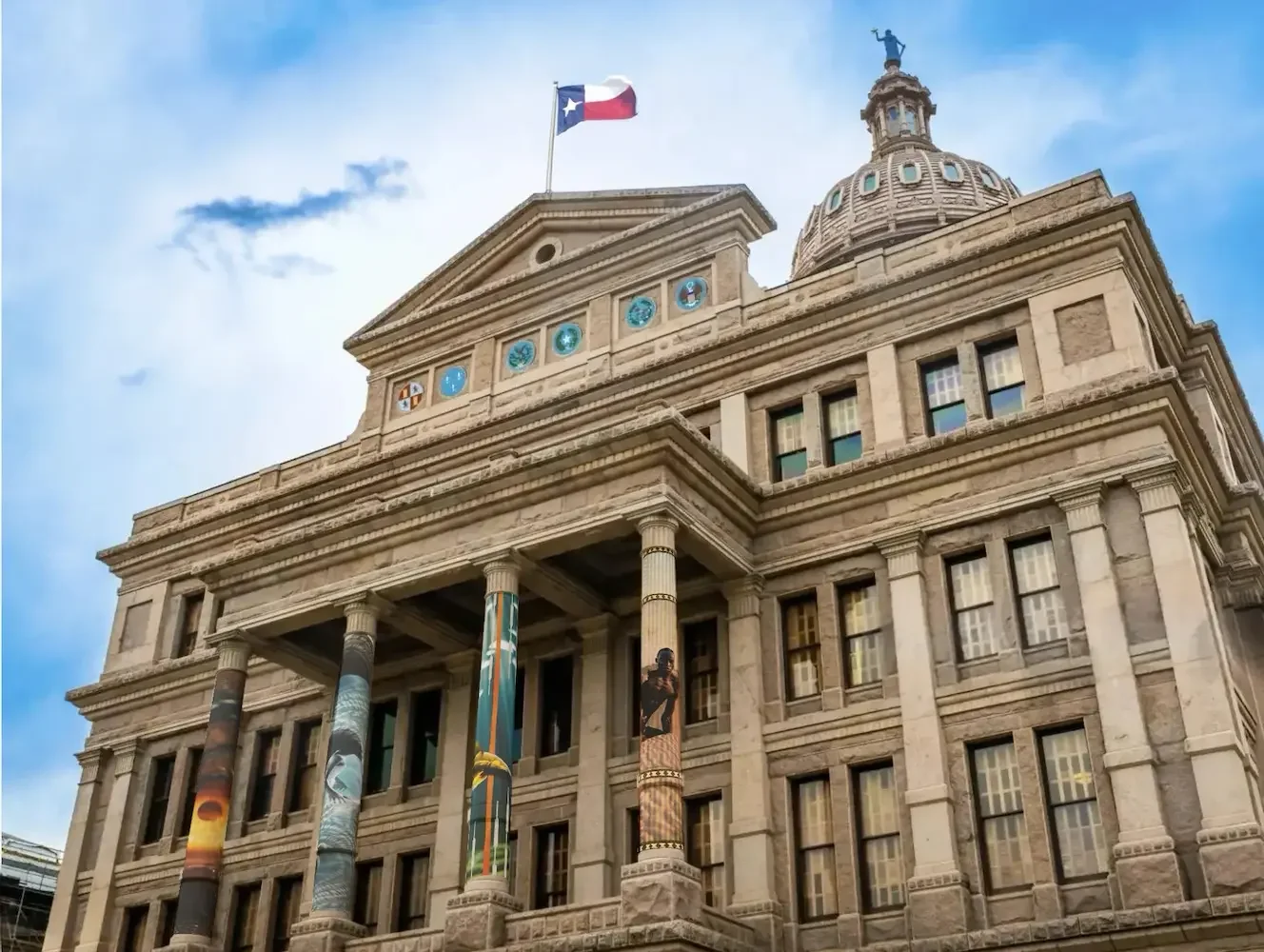
Location: The Texas State Capitol north entrance
The Founders Pillars is a site responsive AR memorial that transforms neoclassical pillars into living canvases overlaid with African textile patterns. Each pillar represents one of the six African regions most impacted by the transatlantic slave trade: Mozambique, Angola, Nigeria, Ghana, Sierra Leone, and Senegal. At the Texas State Capitol (1888), built through the exploitative convict leasing system often described as slavery by another name, the work confronts the persistence of coerced Black labor after emancipation. It fuses colonial architecture with African futurist storytelling rooted in textile traditions and knowledge systems, reframing the building as a site of remembrance.
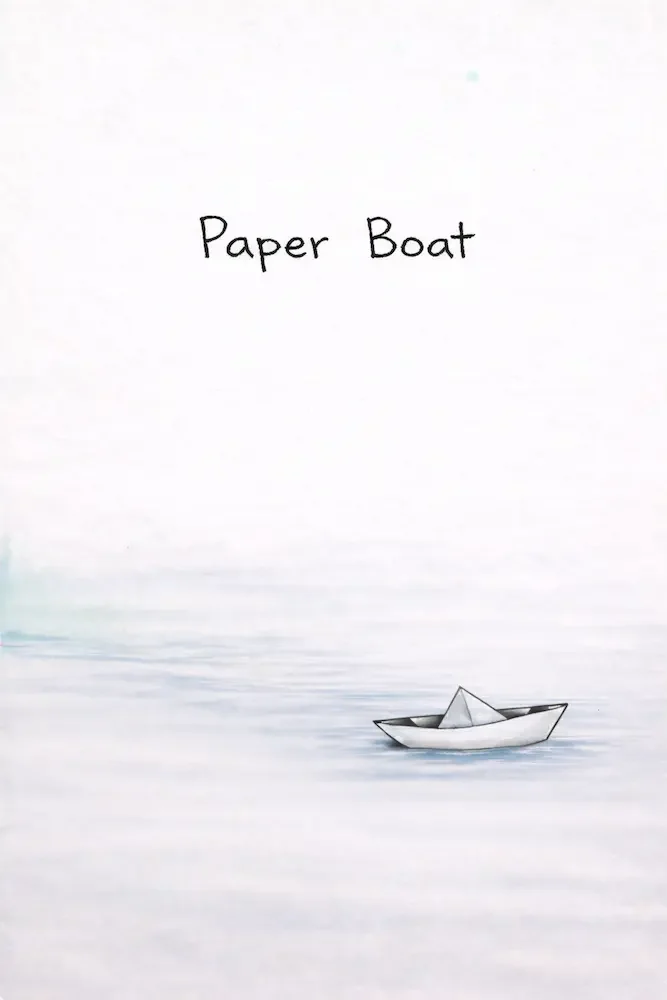
Paper Boat
Paper Boat is a site-specific, interactive augmented reality artwork that stages the climate crisis as an embodied, playable, and performative experience. Confronting the invisibility of sea-level rise, the work overlays rising water, melting glaciers, and plastic waste onto the familiar landscape of Austin. Participants become active spect-actors, navigating a human figure through flooding streets and debris toward a paper boat as the environment slowly submerges around them. Racing against time, players must rescue the figure before the area is overtaken by water. Paper Boat challenges participants to confront global warming not as a distant future, but as a lived, urgent reality.
Location: Seaholm Lawn